links monday


I should have loved biology

"In the textbooks, astonishing facts were presented without astonishment. Someone probably told me that every cell in my body has the same DNA. But no one shook me by the shoulders, saying how crazy that was."


stephancill via interface.social

https://ethconfig.eth.limo is a simple text record service for ethereum addresses. any ethereum address can set key value pairs on this contract to be looked up by anyone else

stephancill.eth keeps building cool shit


Ferrari’s Formula One Handovers And Handover From Surgery To Intensive Care

"Great Ormond Street Hospital for Children (GOSH) benchmarked its handoff from cardiac surgery to the intensive care unit against pit stop techniques of the Ferrari Formula One race car team.Process improvements resulted in increased patient safety and decreased error rates."

"The rating of excellent is the highest possible rating given by the independent Healthcare Commission. Only six trusts out of 157 in the United Kingdom received this rating with GOSH being one"

"So many things can go wrong, and sometimes do, as the tiny vulnerable person is transferred from the surgery to intensive care. Moving the little body from one bed to another is only one part of the complex set of movements that must take place. Wires, equipment, people, and information move about in an intricate dance where a misstep can place the child in mor-tal danger. Within 15 minutes all the technology and support systems, including ventilation, two to four monitoring lines, mul- tiple vasodilators, and inotropes, are transferred two times: going from operating theatre system to portable equipment to intensive care systems."

"the pit stop team completes the complex task of changing tires and fueling the car in about seven seconds. The doctors saw this as analogous to the team effort of surgeons, anesthetist, and ICU staff to transfer the patient, equip- ment, and information safely and quickly from the operating room to ICU."

"Following the trip to Italy, the GOSH team videotaped the handover in the surgery unit and sent it to be reviewed by the Formula One team. The GOSH research team and observers from the Formula One team analyzed the film and noted a great difference in the process map (flowchart)."

"Under the new handover process, the anesthetist was given overall responsibility for coordinating the team until it was transferred to the intensivist at the termination of the handover. These same two individuals were charged with the responsibil- ity of periodically stepping back to look at the big picture and to make safety checks of the handover."

ownership and detachment see Jocko Willink


The Antilibrary: The Hidden Value of Unread Books

"There are things in life that we need to always have plenty of supplies, even if we will only use a small portion.Umberto Eco"

"A good library is filled with mostly unread books. That’s the point."

"My library serves as a daily reminder of what I don’t know."

The Resonant Computing Manifesto

"Christopher Alexander spent his career exploring why some built environments deaden us, while others leave us feeling more human, more at home in the world. His work centered around the "quality without a name," this intuitive knowing that a place or an architectural element is in tune with life. By learning to recognize this quality, he argued, and constructing a building in dialogue with it, we could reliably create environments that enliven us."

"We call this quality resonance. It's the experience of encountering something that speaks to our deeper values. It's a spark of recognition, a sense that we're being invited to lean in, to participate. Unlike the digital junk food of the day, the more we engage with what resonates, the more we're left feeling nourished, grateful, alive. As individuals, following the breadcrumbs of resonance helps us build meaningful lives. As communities, companies, and societies, cultivating shared resonance helps us break away from perverse incentives, and play positive-sum infinite games together."

"Software can now respond fluidly to the context and particularity of each human—at scale. One-size-fits-all is no longer a technological or economic necessity. Where once our digital environments inevitably shaped us against our will, we can now build technology that adaptively shapes itself in service of our individual and collective aspirations. We can build resonant environments that bring out the best in every human who inhabits them."

"Plural: No single entity should control the digital spaces we inhabit. Healthy ecosystems require distributed power, interoperability, and meaningful choice for participants."

herocast must exist so that users on open protocols can have meaningful choice how to access the protocol

links thursday


Klarna partners with Privy to develop simple, secure crypto wallet for the masses

"Klarna, the global digital bank and flexible payments provider, has signed a research partnership with Privy, the leading wallet infrastructure platform and a Stripe company, to explore, research and co-design potential wallet solutions to power a new generation of crypto products for Klarna users. The agreement follows Klarna's recent launch of its own stablecoin, KlarnaUSD, in partnership with Tempo and Bridge. Now, the company is exploring building a wallet to make it easier for everyday people to actually use, store, and transact with crypto, lowering the barrier for mainstream adoption."


Hardware is a Fruit (via Not Boring)

"One of the coolest parts of my job is that I get to talk to really smart people who are building products and companies based on the thoughts in their head. Sometimes, I write long essays on these people and their companies. Typically, the easiest way to get their ideas out into the world is by going on a podcast and yapping for an hour. But there are a lot of ideas that deserve more than a passing mention on a podcast and less than a 10k word deep dive, and that are better expressed by the person whose idea it is than by me once-removed."

Anjan Katta from Daylight Computers writing on Not Boring ♥️


Blogging in 2025: Screaming into the void

The internet looks very different now. People consume (and produce) more on the internet than ever before, but almost all content lives on these big social media platforms designed to keep everything and everyone inside. It feels like the web is shrinking.

one of the reasons I started blogging (again)

A second problem is that of quality: people who put a lot of time in their content (and are very good writers) can now more easily get paid for their work, through paid email newsletters and paywalled websites. All of their content doesn't live on the open web anymore (but at least there are no ads here). This is probably a win for writers, as well as the quality of the overall content being produced (and read) globally, but it's a loss for the open web.


Slow social media

However, the underlying concept of social media is something I resonate with: Stay connected with the people you care about. It's just that the current form of social media is bastardised, and not social at all. Instead of improving relationships and fostering connection, they're advertisement-funded content mills which are explicitly designed and continually refined to keep you engaged, lonely, and unhappy. And once TikTok figured out that short-form video with a recommendation engine is digital crack, all other social media platforms quickly sprang into action to copy their secret sauce.

don't agree with everything in here. solutions go in the right direction, but don't seem very exciting to me. people might want to follow >300 friends and want to post more frequently, but still care about slow social media

herocast values

Software should make our lives better. Social media in 2025 extracts our attention and sells it. Decentralized social is a reset. Protocols anyone can build on, not a single company deciding what you see. I'm building for that future.

herocast is a power user client for decentralized social. Farcaster today, more protocols tomorrow. Open source. No algorithms. You own your data.

It’s not another Twitter clone. Outrage algorithms run and ruin society. Twitter, TikTok, Instagram - they're optimized to stress you out. They work as designed. I want to build something that connects people and helps them get shit done.

What herocast will always do

Build on open protocols
herocast uses protocols that are permissionless. The protocol is the network. The client is the app. We can block content in our app without censoring the network itself. Users who disagree can use a different client or build their own.

Default open
herocast is open-source software. Anyone can fork it, run it, improve it. Transparency and user trust come first.

Respect user sovereignty
No attention manipulation. No gambling mechanics. Users control their experience with algorithms or without.

Ship fast.
Speed over perfection. Get it in users' hands, get feedback, iterate. Pragmatism wins.

Stay curious, ship early.
Crypto is still like the wild west. That's where the opportunity is right now. herocast uses protocols before they're proven because we believe in where they're going and where we can have an outsized impact.

What can change

  • where software delivers value for users (desktop, mobile, web)
  • form factor, protocol, tech stack, business model
  • role in the stack (client, tools, infrastructure)
  • which product to focus on (social client today, onchain tools tomorrow)

What’s next?

The goal is to make herocast the default power user client for decentralized social.

herocast is an open alternative with 20 contributors. People who've helped build what exists today. Thank you! If you want to be part of what comes next: github.com/hero-org/herocast


Thanks to @timdaub.eth, @jamco.eth and @levertz.eth for reading drafts of this.

links wednesday


20 Predictions for Crypto in 2026 (via Peteris Erins from Auditless)

"Fintech L1s accrue no value to $ETH. Ethereum becomes a marketing term and the “Ethereum community” starts caring about the asset again.More stablecoins than L2s. Same mechanism but way easier to launch. In general, the industry learns to monetize TVL as much as it monetizes transaction volume."

"Privacy retracts. I think we are still a couple iterations away from mass adopted applications of privacy tech so while it’s great to see the the value spike I think it is a little premature."

"The first non-USD stablecoins see adoption. I don't think anybody particularly cares about GBP stable coins but CHF or SGD would be another matter entirely. More to explore there."

"AI replaces communities and social media for asset discovery. Memecoin communities have peaked."

"A major celebrity launches a Creator Coin on Base, then everyone forgets about Creator Coins. I think Creator Coins are going to follow a similar trajectory to memecoins and friend.tech. The negative flywheel effect when early holders start to actually lose money does not facilitate long-term patronage in current iterations."

"AI vulnerability detection starts working. First tools that can find independent vulnerabilities in smart contracts are established. However, they still don't replace audits and teams that rely entirely on AI auditing get burned."

"1-2 major prediction market betting categories disappear. We discover that insider incentives lead to unfair markets and platforms self-regulate or get regulated."

"2025 is coming to a quiet and painful end and we’re questioning everything again starting from blue chip chains like Optimism and Bitcoin to AI."


Has the cost of building software just dropped 90%?

"The economics have changed dramatically now with agentic coding, and it is going to totally transform the software development industry (and the wider economy). 2026 is going to catch a lot of people off guard."

"Take an average project for an internal tool in a company. Let's assume the data modelling is already done to some degree, and you need to implement a web app to manage widgets."

"Previously, you'd have a small team of people working on setting up CI/CD, building out data access patterns and building out the core services. Then usually a whole load of CRUD-style pages and maybe some dashboards and graphs for the user to make. Finally you'd (hopefully) add some automated unit/integration/e2e tests to make sure it was fairly solid and ship it, maybe a month later."

"And that's just the direct labour. Every person on the project adds coordination overhead. Standups, ticket management, code reviews, handoffs between frontend and backend, waiting for someone to unblock you. The actual coding is often a fraction of where the time goes."

"Jevons Paradox says that when something becomes cheaper to produce, we don't just do the same amount for less money. Take electric lighting for example; while sales of candles and gas lamps fell, overall far more artificial light was generated."

"Engineers need to really lean in to the change in my opinion. This won't change overnight - large corporates are still very much behind the curve in general, lost in a web of bureaucracy of vendor approvals and management structures that leave them incredibly vulnerable to smaller competitors."

"But if you're working for a smaller company or team and have the power to use these tools, you should. Your job is going to change - but software has always changed. Just perhaps this time it's going to change faster than anyone anticipates."


James Cameron On AI in Hollywood

"A typical Avatar film takes 1,000 VFX people and he intends to keep it that way: [I want to work with] 1,000 people but for half the time. Then, we start the next one. So, nobody loses a job. Our cadence increases. Our throughput increases.Look, I’m 71. I got a finite amount of time, maybe another 30-40 years at most."

Cameron thinks the potential cost-savings of GenAI will be a positive for the industry by allowing the creation of new ideas that wouldn’t be financially viable otherwise: "[Look at] Dune or Wicked. They don’t have a lot in common as storytelling.But they both have big sets and they cost a lot of money in VFX. […]How many movies are going to get greenlit where you’re spending that amount of money on VFX that are not tried-and-true blue chip IP? Where does the young up-and-coming aspiring filmmaker — whose head is bursting with ideas like The Terminator or Aliens or The Abyss — get their foothold? They don’t [right now]. [So, the VFX] has got to be cheaper."

"Cameron doesn’t think AI will ever fully replace human actors and our individual-ness is the key going forward: [GenAI is] trained on everything we ever valued artistically. They don’t put the crap stuff into the training data. They put the stuff that’s been published. That’s online. The art. The performances. The movies. Whether they’re doing it legally or ethically…to be determined. Let’s assume that [GenAI] is almost de facto selection for that which the human eye and the human consciousness enjoys, right? That goes into the training data. So, millions and millions of images and thousands of hours of performance. What you’re going to get is the average. It goes in a blender, right? Then it precipitates out as a single unique new image, but it’s based on a sort of a generic feedstock. What [GenAI] can never do is create a unique lived experience reflected through the eyes a single artist. Whether that’s a single writer or single director or single actor.[AI] won’t select for the quirkiness or the offbeat-ness.I think what we celebrate is the uniqueness of our actors. Not their perfection, not their kind of glossy, Vogue-cover beauty. But their off-centerness."


Tempo Testnet Launch

GitHub - tempoxyz/tempo: the blockchain for paymentsthe blockchain for payments. Contribute to tempoxyz/tempo development by creating an account on GitHub.GitHubtempoxyzExchanging StablecoinsLogoTIP-20 Token StandardLogoFee AMM OverviewLogoPayment Lane SpecificationLogo

Hats Protocol: What's Next?

Hats Protocol is shutting down their operations company. There's no longer a funded core team maintaining the project. The community is now voting on what comes next:

  • a) Launch DAO and token as planned
  • b) Hats as OSS + "Maintenance mode"
  • c) Something else

I always appreciated the idea of the protocol and the effort to build what should exist vs. jumping on the latest trends in crpyto. There's a need to build idealistic protocols that can only work with blockchain tech. It's the kind of thing that should exist. But how should they monetize? How can they survive if no one is willing to spend money on it right now?

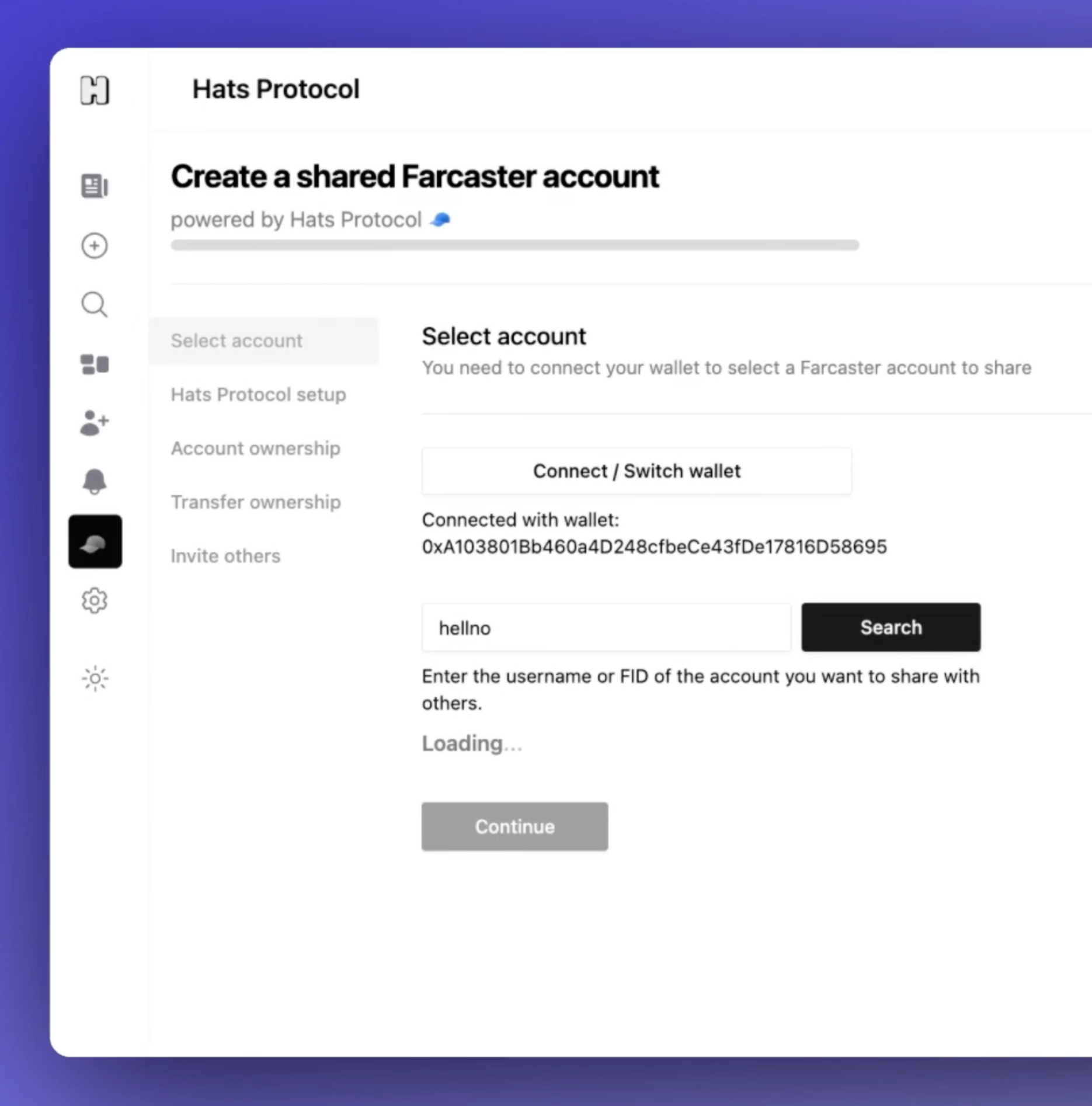
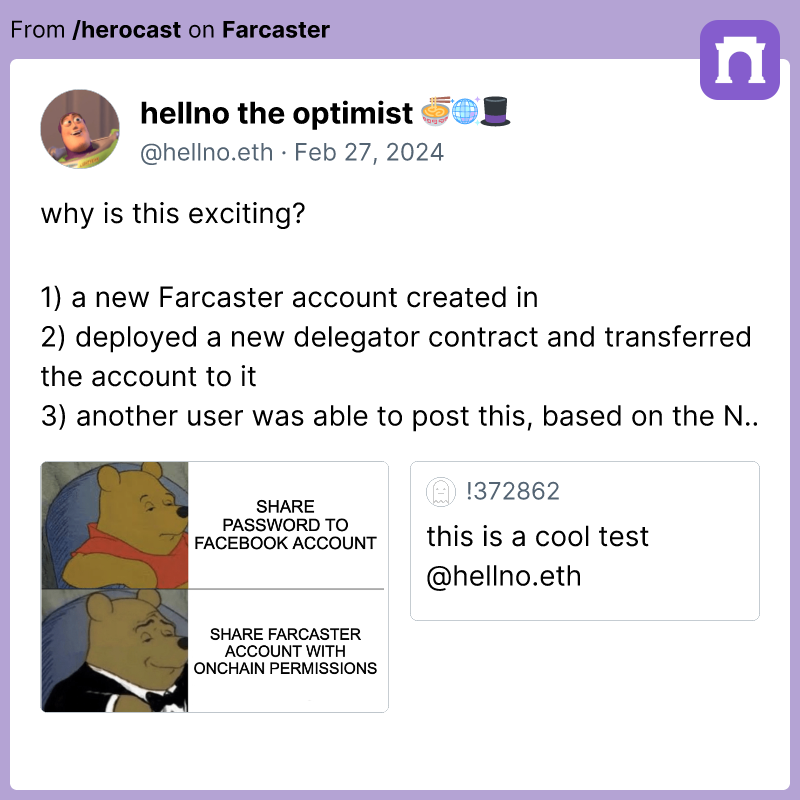
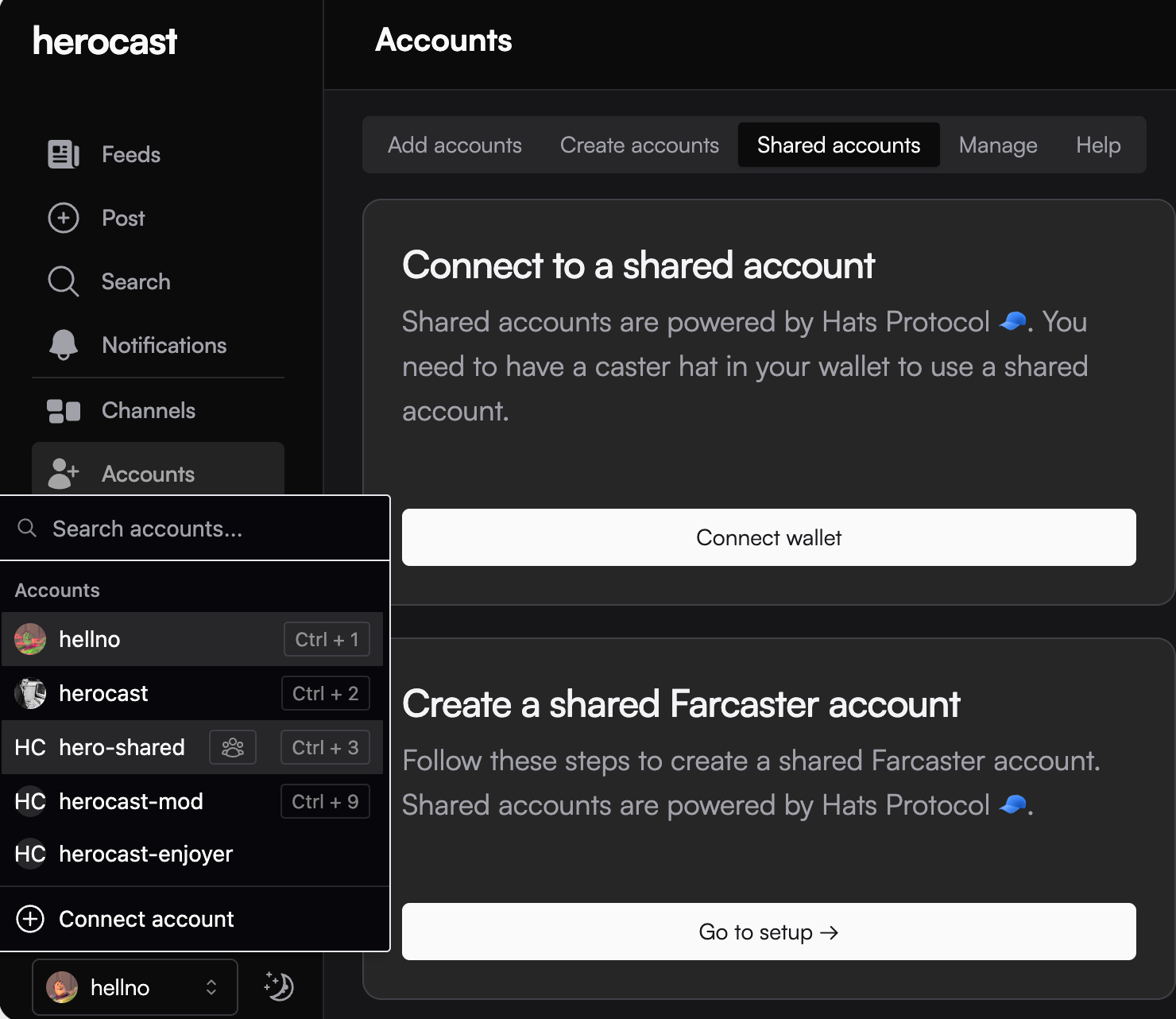
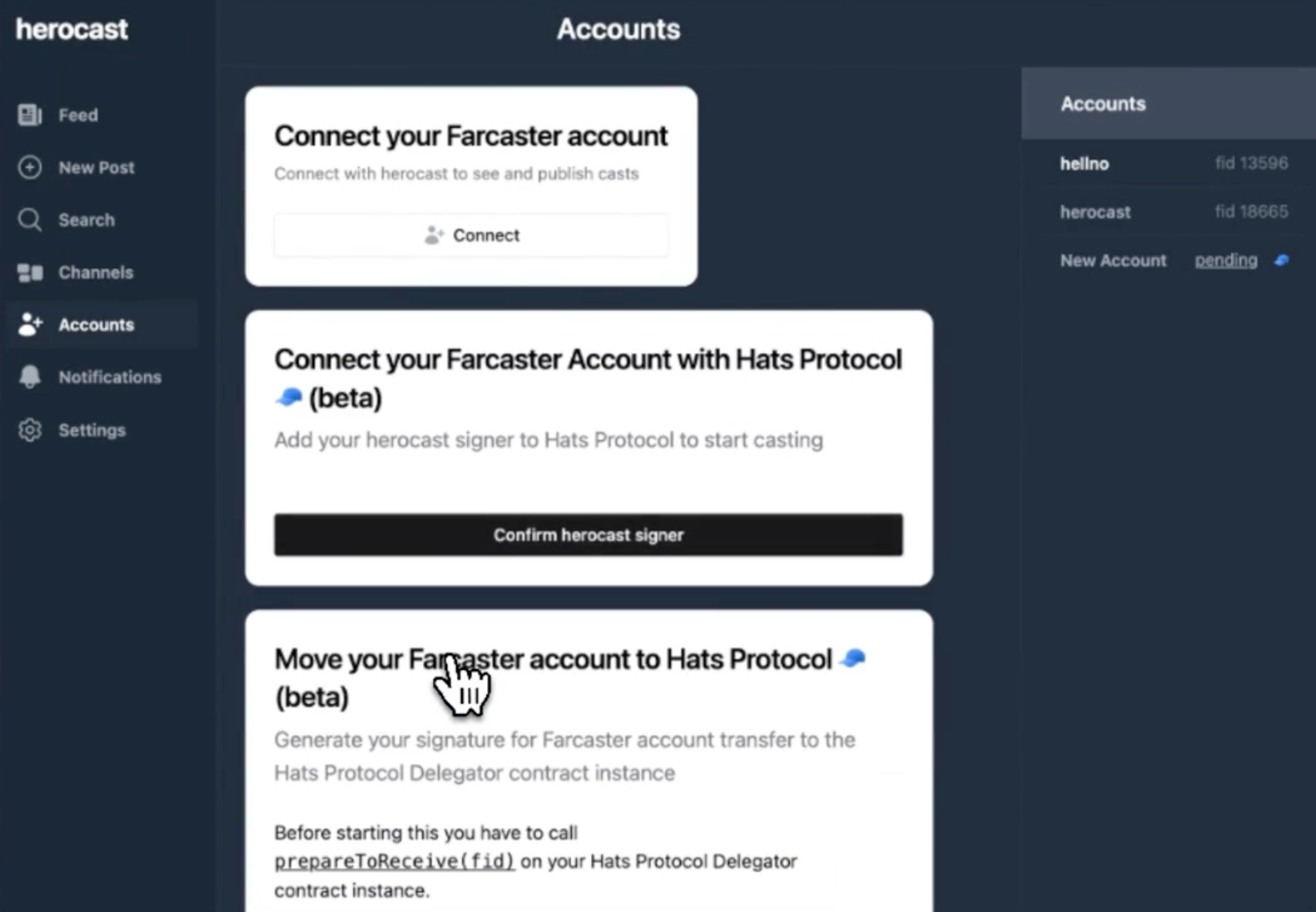
While I built herocast, a Farcaster client for power users, I collaborated with Spencer, Nick and Ido. We pushed a feature that let Farcaster accounts be managed onchain through Hats. DAOs could control who has access to post from a shared account, managed through the onchain permissions in Hats Protocol.

Onchain permissions for social accounts. Clean integration with DAO tooling. The right architecture.

We didn't get traction.

Even for my @herocast account, even their investors - we didn't end up using the feature. Part of it was practical: Warpcast (now Farcaster's main app) didn't support DMs outside their client, which kills a lot of the "shared account" use case. I think the deeper issue is that we built for a need that wasn't urgent enough.

The Current Crypto Vibe

The only things "working" in crypto right now are gambling and stablecoins. Infrastructure and DAO tooling? No customers. The builders who care about decentralized coordination are still here, but the market isn't buying what we're selling.

I feel part of an aligned group that wants this to succeed. We need this infrastructure. But I'm also guilty of the same thing: building what should exist instead of what people are desperate for today. That's the uncomfortable truth.

What We Can Learn From Splits

Look at what Splits is doing. Clean UX. Great at hustling in a related niche. They started with a simple primitive: split money onchain between users. From there, build features people need:

  • Multi-safe management for orgs
  • Scheduled sending
  • Basic accounting and compliance tools

They're not waiting for "DAOs" to become mainstream. They're serving businesses that want to do things onchain today.

My Vote: Option B, But Make It Useful

I'm proposing B - run it as open source, keep the lights on, make it fully infrastructure. But with a specific direction: Make it as easy to use as possible.

Hats has solid infrastructure for role-based access control. The contracts work. The protocol is sound. What's missing is the bridge to people who need it right now.

The path forward isn't more DAO tooling for DAOs. It's:

  1. Start with businesses - Companies already managing crypto treasuries, NFT projects, protocol teams
  2. Solve immediate pain - Who can sign what? Who has access to which accounts? How do we onboard/offboard people?
  3. Keep the spirit - Onchain contracts that help people coordinate, but wrapped in UX that doesn't require a PhD in Ponzinomics

The Hats DAO (=we) need to ask: do we have a clear goal as a collective? If we're going to pursue something together, what is it? Who is setting the goals? Is there enough aligned energy to turn this into something today? I don't have all the answers, but would love to help keep Hats Protocol going so the infrastructure is ready when DAO season will come back.

random screenshots from Hats x herocast time last year

Coming soon

Coming soon

hey this is hellno, a brand new site by hellno that's just getting started. up and running soon, but you can subscribe via RSS or subscribe via email in the meantime if you'd like to stay up to date